


Roll Container
HM: Your Professional Roll Container Manufacturer!
HM Group is a professional in design and manufacturing, trading, and exporting company in the field of material handling products. We are committed to providing customers with high-quality products
Quality Assurance
Third-party certification agencies such as SGS and TUV, certify our factory every year and we pass it smoothly. We have an NSF test report, ISO9001, and we can provide all the certifications you need.
Rich Experience
With more than 21 years experience in manufacturing and exporting goods all over the world, HM Group has established itself as one of the leading suppliers in China.
Affordable Price
You can get our catalog online or visit our factory to see our products. We also provide competitive prices and excellent customer service for all our customers.
24H Online Service
HM Group sales team have full experience in material handling and help a lot of clients save more cost and build strong and safe storage solution.
-
Steel Logistics Roll Container
The Steel logistics roll container has a strong and durable structure to withstand daily use and remain safe and secure. . . Model No.: HM-RC-AP001. Loading Capacity: 500 kg. Loaded in 1x40'GP: 145
-
Heavy Duty Rolling Container
The heavy duty rolling container can bear a load of up to 500kg, making it ideal for industrial and commercial environments.. . Model No.: HM-RC008. Tube Diameter: Φ19&25x2mm. Wire Diameter: Φ8&Φ 6
-
A Frame Roll Container
As a professional A Frame Roll Container manufacturer, HM Group presents a hot-dip galvanized steel container designed for high-frequency logistics operations. With a 500kg load capacity and foldable
-
3 Sided Roll Container
3 sided roll container is a solution for efficient material handling. Its three-sided structure provides easy access to materials from all sides. This function can prevent the goods from falling from
-
Worktainer
The worktainer, a nestable flexible pallet, is our standard product that increases productivity and provides a reliable, high-quality solution for warehouse operations.. . Model No.: HM-RC-A001.
-
Prestar Worktainer
With its sturdy and durable construction, this prestar worktainer is designed to withstand daily wear and tear. But that's not all - the L-shape folding feature makes it incredibly convenient to
-
Nesting A Frame Roll Container
The nesting A frame roll container can be nested together to save space when not in use. It has two fixed wheels and two universal wheels (with brakes) to ensure the safety of the goods when it needs
-
Collapsible Pallet Roll Container
The side and base design of the collapsible pallet roll container allows them to withstand loads of up to 300kg and can be folded and nested to save space.. . Model No.: HM-RC007. Tube Diameter:
-
Mesh Roll Container
Mesh roll containers have a load capacity of up to 500kg, and are equipped with wheels to make them more convenient and flexible to move.. . Model No.: HM-RC009. Tube Diameter: Φ19x1.8 mm. Wire
-
Roller Metal Container
Roller metal container is easy to fold and store, made of Q235 mild steel, with a service life of up to 3-5 years.. . Model No.: HM-RC009. Tube Diameter: Φ19x1.8 mm. Wire Diameter: Φ8&Φ 6 mm. Loading
-
Roller Containers
Roller containers are ideal for use in cold rooms because the mesh design does not block the flow of cold air.. . Model No.: HM-RC005. Tube Diameter: Φ19&25x2mm. Wire Diameter: Φ3 mm. Loading
-
Supermarket Roll Container
Supermarket Roll Container is a commonly used transport and storage equipment tool in supermarkets, which can withstand a load of up to 300kg.. . Model No.: HM-RC007. Tube Diameter: Φ20x2mm. Wire






What Is A Roll Container?
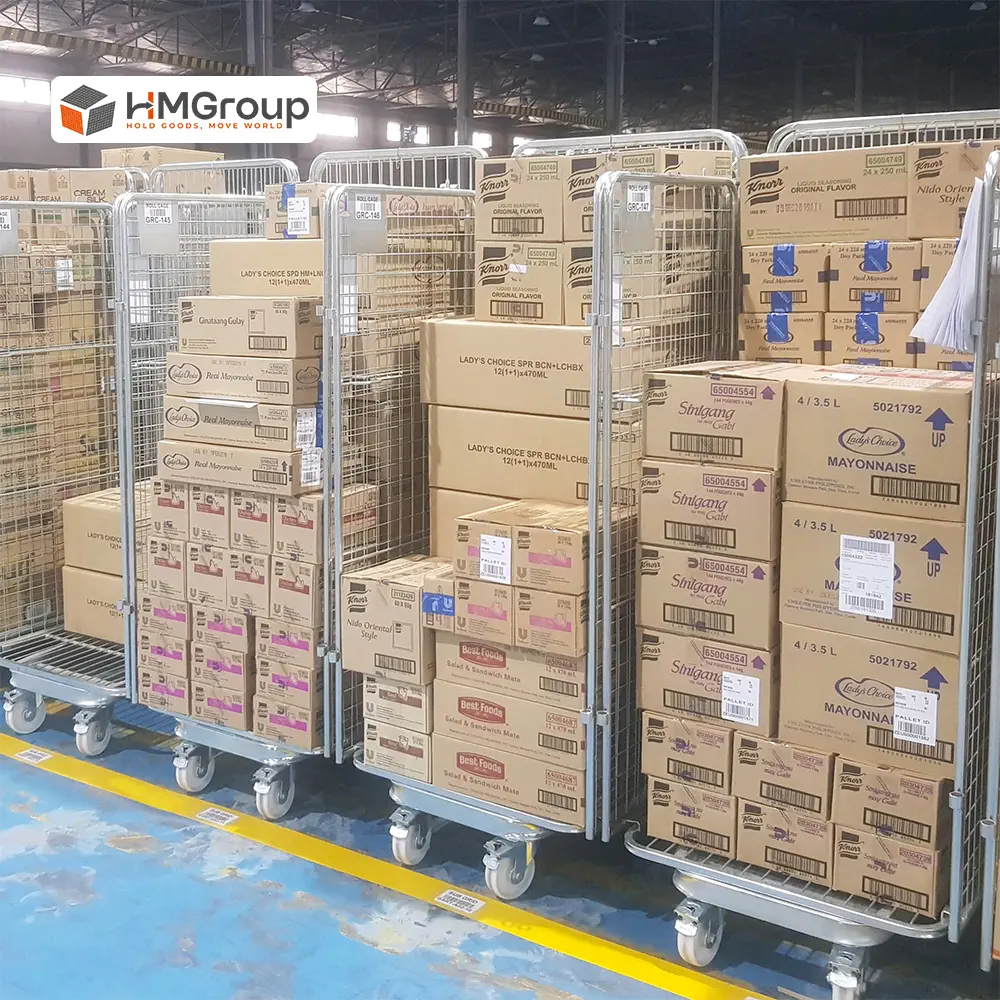
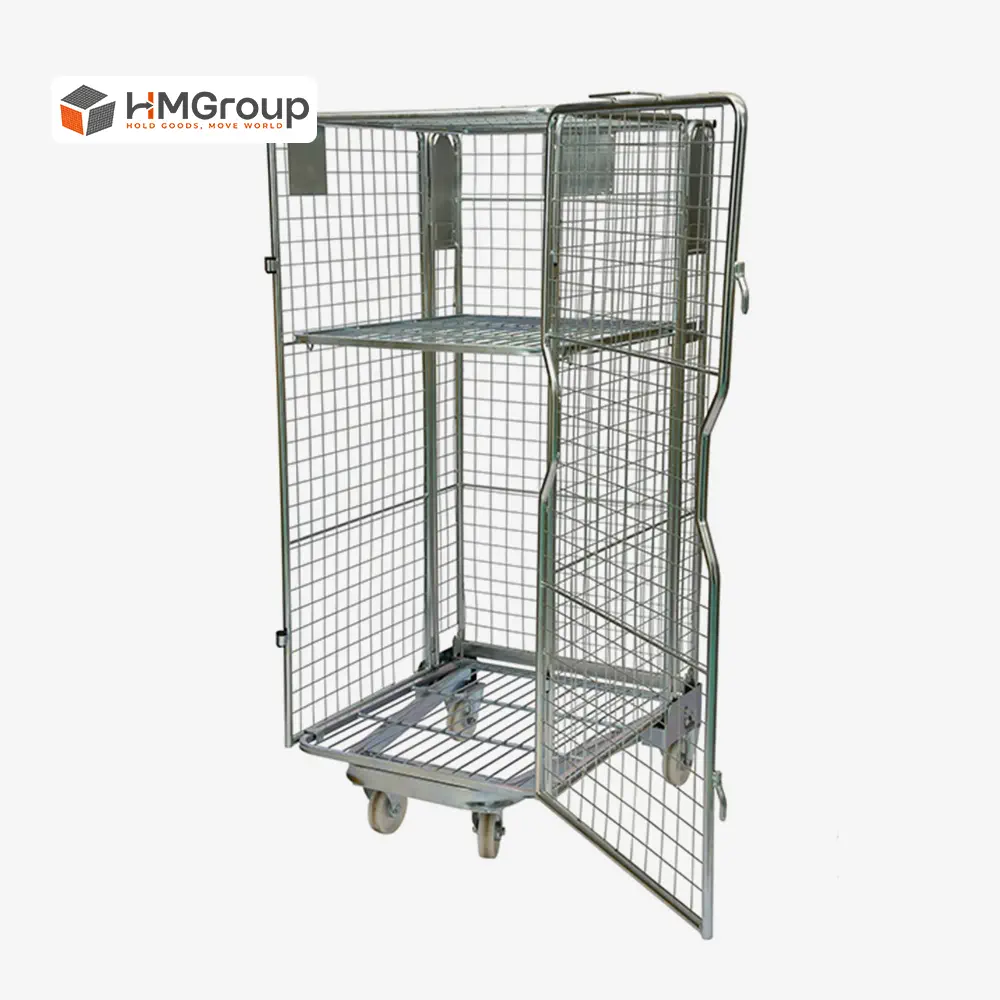
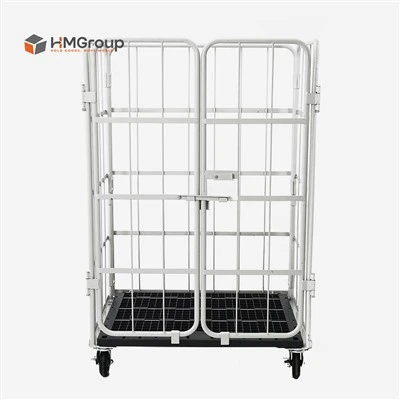
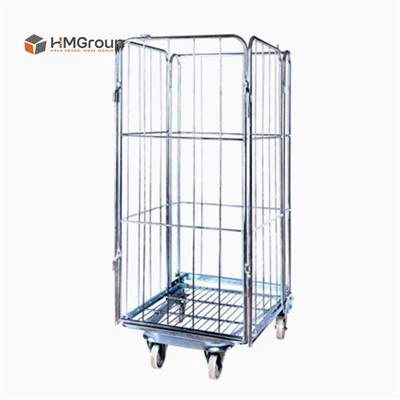
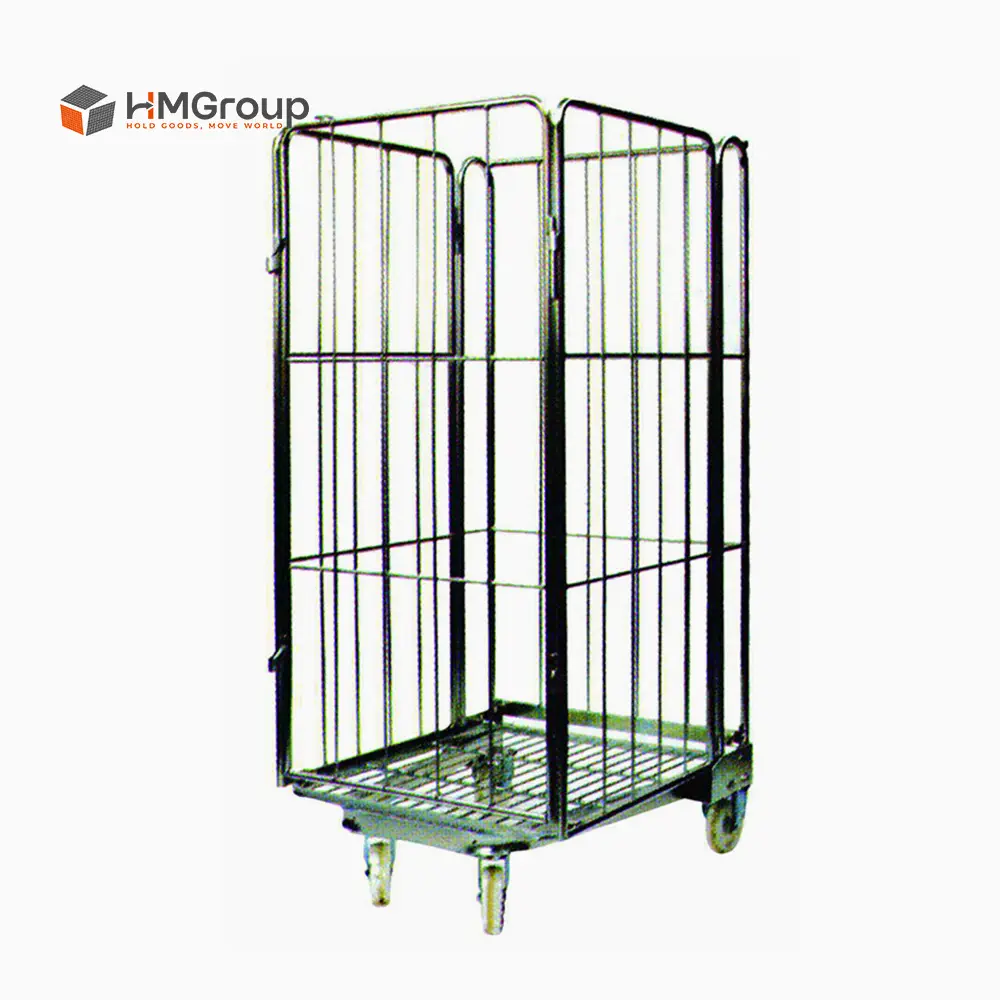
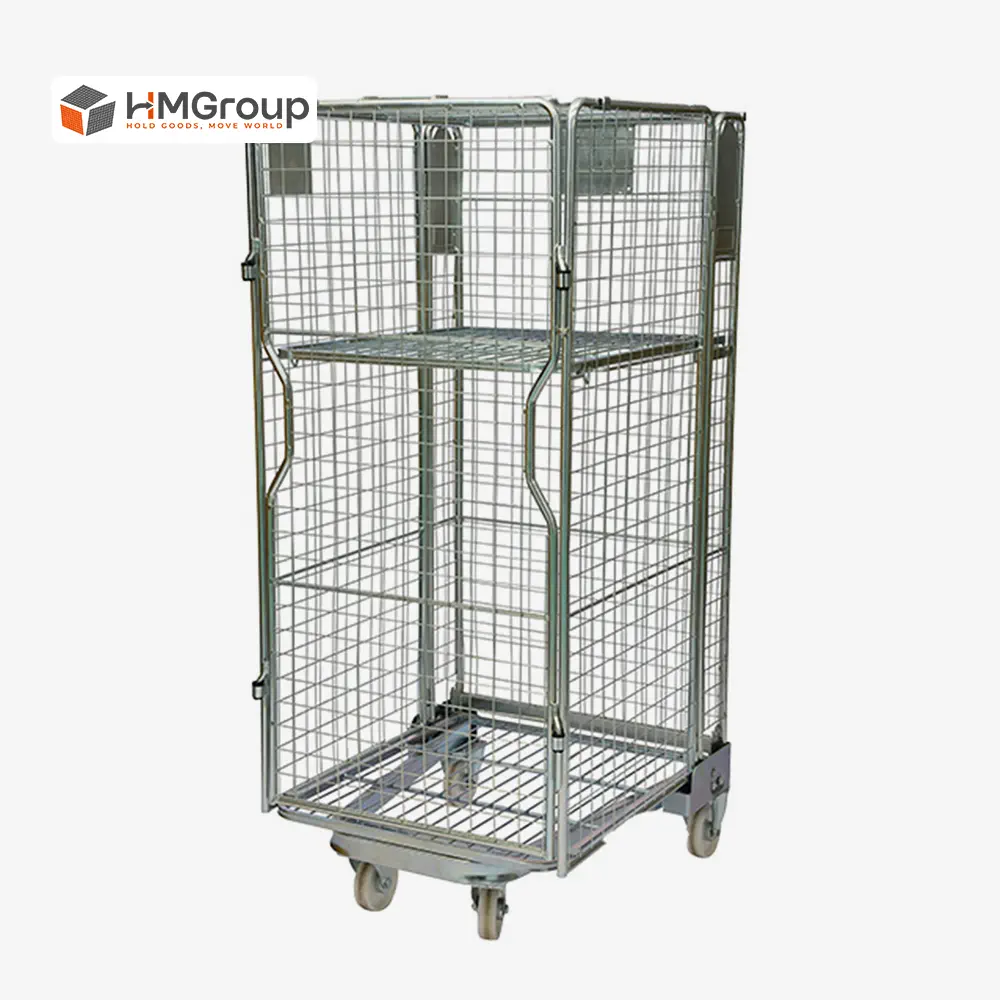
Roll cages (also known as roll containers or roll pallets) are half-pallet-sized platforms, with four running castors beneath and with a wire cage mounted on the platform to contain goods during transport.
Features of Roll Container
Strength in Size
The Roll Container boasts jumbo storage, expertly handling weights of up to 500 kg with ease. Maximize your space without compromising on strength.
Open Access Design
The three-sided structure ensures swift, unhindered access to your essentials. Perfect for quick, efficient item retrieval.
Rust-Resistant Brilliance
Finished with zinc-plated mesh, this trolley resists wear and rust, extending product lifespan.
Compact and Versatile
Its nestable design is customized for restricted spaces, ensuring space efficiency and adaptability.
Hygiene First
With a design ready for steam cleaning or pressure washing, maintain top-tier cleanliness, especially crucial in healthcare or food sectors.
Customized Storage
Benefit from up to 4 sides wire mesh, granting you the freedom to organize as per your needs, ensuring convenience and efficiency.
Glide with Ease
Equipped with four casters, two fixed and two swivels, maneuver seamlessly and protects your floors from damage. Effortless transport, every time.


Types of Roll Containers
Two-sided Roll Container
With metal wire mesh on two sides of the cage, these are most suitable for stocking lightweight items that are unlikely to fall. Two-sided cages give you good access to the goods from multiple angles, meaning they're very flexible for storing and stocking lightweight boxes and goods.
Three-sided Roll Container
Three-sided containers are wire mesh at the back as well as the sides, providing more support against falls and damage to stock. As such they can be used for heavier items while still providing easy front loading and unloading access.
Four-sided Roll Container
With a closable (and sometimes lockable) front door, these roll containers are ideal for storing goods that need a high level of protection and for moving heavier goods that have the potential to fall.
Full Security Roll Container
Similar to four-sided roll containers, these have front-door access and a large load capacity, meaning they are suited to heavy goods and long-term storage. It also allows you to store high-value goods with the ability to lock the door to protect contents.
Jumbo Roll Container
A large storage capacity makes jumbo roll containers ideal for storing and moving bulk items.
Demountable Roll Container
Demountable roll containers come with a storage section that can be removed for more convenient long-term storage.
Nestable Roll Container
If saving space in your storage or warehouse area is important, then nestable roll containers could be a great option. These are containers that slot together when not in use, meaning several units can be stored in a small space. It's important to get nestable containers of the same size and brand to ensure maximum space-saving potential.
Applications of Roll Containers
Retail
Roll containers are frequently used in retail environments for transporting goods within stores, distribution centers, or warehouses. They are used to move items from storage areas to shop floors and for restocking shelves.
Logistics and Distribution
In logistics and distribution centers, roll containers streamline the movement of goods, especially during picking, packing, and shipping processes. They aid in organizing and transporting items within warehouses or between distribution points.
Manufacturing
Industries involved in manufacturing often employ roll containers for transporting components, parts, or finished products within production facilities. They facilitate the assembly process and the movement of materials on the manufacturing floor.
Food and Beverage
Roll containers are used in the food and beverage industry for transporting packaged or unpackaged food items, beverages, and other supplies within processing plants, distribution centers, and retail outlets.
Hospitality
Hotels, resorts, and event venues use roll containers for handling and transporting linens, towels, cleaning supplies, and other hospitality-related items.
Healthcare
In healthcare settings, roll containers are utilized for the storage and transportation of medical supplies, equipment, linens, and medications within hospitals, clinics, and other healthcare facilities.
E-commerce and Fulfillment Centers
With the rise of e-commerce, roll containers play a crucial role in e-commerce warehouses and fulfillment centers for organizing, storing, and transporting products for order fulfillment and shipping.
Automotive and Manufacturing Supply Chains
Roll containers are used to transport parts, components, and materials in automotive manufacturing and other industries with complex supply chains.


Key Benefits of Folding Roll Containers

Very Durable & Tough
The soundness of the product can be described from the tough conditions it survived and worked nicely in. These containers are very durable and tough and are capable of working in drastic situations.
For handling and carrying heavy goods as well, which are more weight than the roll cages, these cages can be efficiently used with no harm to the cages and 100% performance.
These containers can be used to move products back and forth and in any other way in rough conditions with no wear and tear to them. This is the major benefit of these containers.

Complete Protection of the Items
Another important thing that needs to be achieved with the containers is that these should provide complete protection to the items kept inside them. No matter in what situation you use these roll cage trolleys, it will provide complete safety and security to the items kept inside it with no harm to them.
This is why they are also called rolling security cages and are widely used for different purposes. Thus, the security they impart is another major benefit of these cages.

Simple to Handle
The performance of the containers depends on the way they are handled and carried. For this, the containers themselves must be easy and simple to carry and handle.
These cages are very efficient and very simple to handle. Because of this reason, it becomes very simple for a person to handle these cages and get the best performance out of them. Hence, enjoy the advantages of these containers with easy handling.

Easily Available
These cages are easily available in the market in a wide variety and it is not enough to find them. Also, for different kinds of purposes, different kinds of cages are available which give people a choice of using the suitable one for their specific purpose. This is also one of the major benefits for which people get it easily and then use it simply.
Size of Roll Container: You need to choose a container size. A variety of sizes are available in a standard container, from small and compact for light domestic users to jumbo for large businesses and everything in between!
You'll want to think about how much space you have and how often you plan to use it before deciding which size is best for your needs.
Material of Roll Container: What material should it be made out of? The most common materials used in these containers are plastic and metal. Plastic is cheaper, but it doesn't last as long as metal. If you are going to use the material only occasionally, then plastic is better.
Storage Location: Where will this container live? If it's going outdoors or in an environment that may get wet, then metal would be a better option than plastic because water can damage the surface of the container over time if not properly cared for.
Price: When you are looking to buy a new roll container to buy, be sure to consider the different prices and features. Only buy something if it solves a problem or helps you reach your goal. Don't purchase things just because they are the cheapest option.
How do you use roll containers?

01.Loading and Unloading Safety
One of the main causes of injuries and accidents in warehouses is the high rate of loading and unloading goods from roll containers, without employees taking breaks. Sometimes the demands are very high, which means that employees work extra hours to increase warehouse efficiency.
Continuous lifting can cause muscle pain and injuries. It is therefore important that employees take breaks during work, besides stretching exercises to allow their muscles to relax. This will maintain their health and prevent any kind of injury.
It is also necessary to use good quality roll containers, which ensures safe loading and unloading. By following these simple steps, you will avoid injuries and accidents in the workplace. That is why safety instructions should be observed during loading and unloading tasks in the warehouse.
02.Secure The Roll Container Sides with Fastening Straps
03.Safe Movement of Roll Containers
Employees should be properly trained in moving rolling cage trolleys in the workplace. Although the containers can be pulled out to their destination, this causes a high level of impact stress that can cause loads and injuries to the mesh truck operator. Therefore, rolling containers should be pushed around the workplace only at walking speed, so that they do not gain excessive momentum, which could hinder their sudden stopping time in an emergency. Remember also that the brake should be locked before loading - this will immobilize the truck during loading.
Employers should also ensure that only one person manually controlling the truck operates one container at a time. In large warehouses, to save time, electric trolleys are used, which can transport several pieces at a time. However, you still need to take care when transporting more roll containers.
04.Slopes and Rough Area
05.Wheels as A Point of Contact
Wheels on roller cages aim to move smoothly across the floor of warehouses, factories and stores, but must be well maintained to avoid safety problems. Because these parts are in constant use, they can easily be damaged or the bearings can wear, causing friction of a single wheel in the roll container, affecting the movement of the unit as a whole.
If the roll container does not move smoothly, this can cause problems for the operator because then the movement of the container is unpredictable, which can lead to safety problems, e.g. hands, feet and limbs can become trapped between the container and other surfaces, such as the sides of another roll container or its shelves. In every company using roll containers, a regular maintenance schedule should be used. Wheels of each trolley should be checked for defects, and any problematic wheels immediately replaced.
06.Don't Overload Containers
One of the most common reasons for accidents with roll containers in warehouses is overloading. Often, employees are tempted to overload containers to get the job done faster. However, this should never be done.
It is better to make the trip twice with fewer goods and be safer than one trip that is overloaded, which creates a dangerous situation. Always comply with load limits. Also, it is safer to go below the maximum load capacity of the container than to go beyond it. Remember also how to arrange the goods. We pack the heaviest things at the bottom, lighter at the top, then the distribution of goods in the roll container is appropriate.

How to Maintain Your Rolling Storage Containers?
Regular Cleaning
One of the simplest yet most effective maintenance practices for your rolling storage containers is regular cleaning. Accumulated dirt, dust, and debris could speed up the wear and tear of any specific material. Follow these steps for thorough cleaning:
1)Empty the container: Remove all items from the container, ensuring it's completely empty.
2)Remove loose debris: Brush or vacuum away loose dirt and debris from both the interior and exterior of the container.
3)Wash with mild detergent: Use a mixture of mild detergent and warm water to clean the container's surfaces. Scrub with a soft brush or cloth, paying extra attention to corners and seams.
4)Rinse and dry: Rinse the roll container thoroughly to remove any detergent residue. Allow it to air dry completely before use to prevent the growth of mold and mildew.
Lubrication of Wheels and Casters
The wheels and casters are critical components of any roll container and cage trolley, and they require regular lubrication to function smoothly. Here's how to do it:
Inspect for wear: Check the wheels and casters for signs of wear, such as cracks, flat spots, or loose fittings. Replace any damaged components promptly.
Apply lubricant: Use a suitable lubricant (usually silicone-based) to lubricate the wheel bearings and casters. Ensure that all moving parts are adequately covered. Lubrication reduces friction, prolonging the life of these components.
Check for Loose Bolts and Fasteners
Regularly inspect the container's frame, handles, and any additional attachments for loose bolts or fasteners. Tighten them as necessary to maintain the structural integrity of the container. Loose parts can lead to instability and potential accidents.
Rust Prevention
Metal rolling storage containers are susceptible to rust, which can compromise their durability and appearance. To prevent rust:
①Apply rust-resistant coatings
Consider applying rust-resistant coatings or paints to the container's exterior. This provides an additional barrier against moisture and corrosion.
②Keep containers dry
Store your cage trolley in a dry environment and avoid prolonged exposure to rain or high humidity.
③Use rust inhibitors
Inserting rust inhibitor products or desiccants inside the container can help control moisture levels and prevent rust formation.
Look Out for Any Damage
Frequent inspections are crucial for identifying and addressing any damage promptly. Look for signs of dents, bends, or cracks in the container's structure. Damaged containers should be repaired or replaced to prevent further deterioration.
Know the Load Capacity
Respect the manufacturer's load capacity recommendations to avoid overloading your rolling storage containers. Excessive weight can lead to structural damage, wheel or caster failure, and accidents. Ensure that employees who use these containers are aware of the load limits and adhere to them.
Safe Handling and Transportation
Proper handling and transportation practices can significantly extend the life of your rolling storage containers:
1)Avoid rough terrain
Whenever possible, use these containers on smooth surfaces and avoid rough or uneven terrain that can put unnecessary stress on the wheels and casters.
2)Use appropriate lifting techniques
When loading or unloading heavy items, use proper lifting techniques and avoid dropping items into the container, which can cause impact damage.
3)Secure the load
Use straps, ropes, or bungee cords to secure the load within the container, preventing it from shifting during transportation.
Summing Up
Maintaining your rolling storage containers like a pro is essential for their longevity and safe operation. Regular cleaning, lubrication, rust prevention, and damage inspection are vital practices that should become routine. By following these maintenance tips, you can ensure that your rolling storage containers from HML Group remain reliable assets in your workplace or storage facility for years to come. Proper care not only extends their lifespan but also contributes to a safer and more efficient work environment.
Our Certifications and Roll Container

Frequently Asked Questions About Roll Containers
Q: What are roll containers?
Q: Where does the roll container work?
For example, castors working in cold stores have to withstand large temperature differences, so the most common are polyurethane and polypropylene wheels. On the other hand, the wheels that will be adapted to the trolleys used in hospitals and hotels must be quiet, i.e. have a tread made of thermoplastic rubber, so as not to disturb with noise.
Q: What is a roll pallet?
Q: What are the differences between roll pallet and roll container?
In the logistics industry the terms “roll pallet” and “roll container” are used every day but what is the difference between them?
The simple answer is that there is no difference between a roll pallet and a roll container and more often than not (despite being named differently) they are the same unit. Originally on the US Patent from 1982, the name was “roll pallets” and this still seems to be the most popular term. However, with the nestable nature of modern-day roll pallets, we are seeing the term roll container gaining more momentum, this is influenced by full security and four-sided versions being very popular and seeing units that “contain” and store products in warehousing and shops, not just used for shipping.
In Europe the term predominantly used is roll pallets with some exceptions such as in Finland and Ireland. Countries further from the UK such as Africa and Australia mainly refer to the products as roll containers
Q: Where are roll containers commonly used?
Q: How much weight can roll containers typically hold?
Typically, the weight capacity of roll containers can range from a few hundred pounds to over a thousand pounds. Here are some general guidelines:
Light-Duty Roll Containers: These may have a weight capacity ranging from 200 to 500 pounds. They are suitable for lighter or less bulky items.
Medium-duty Roll Containers: These can have a weight capacity in the range of 500 to 1,000 pounds. They are designed for handling moderate loads.
Heavy-Duty Roll Containers: These are built to handle heavier and bulkier loads, with weight capacities exceeding 1,000 pounds.
Q: What are the dimensions of a standard roll container?
Height: Typically, the height of a standard roll container can range from around 5 feet (150 cm) to 7 feet (210 cm). The height may vary depending on whether the container is designed to stack with others.
Width: The width of a roll container is often in the range of 2 to 3 feet (60 to 90 cm). The width may also vary based on the number of sides and the overall design.
Length: The length of a standard roll container is typically in the range of 3 to 5 feet (90 to 150 cm). The length may vary based on the specific design and the intended use.
We offer different sizes of roll containers. Additionally, some roll containers may have collapsible features for easy storage when not in use. Please contact us for more information.
Q: What are the available designs of roll containers?
2)Optional base: square, "A" or "Z" type design
3)Possible to add name plates for identification
Q: What types of materials are roll containers typically made from?
Q: Do you offer customized Roll Container?
Q: How many wheels do roll containers have?
Q: What are the advantages of using roll containers for storage and transport?
Flexibility: The flexibility of the metal-based roll containers ensures that you can employ them for multiple jobs at your place. Hence, if you're looking for durable utilities, these containers are the perfect solution for your various needs.
Safe storage: Out of all the possible electrical or electronic gadgets used in facilitating the storage of goods, these containers offer the utmost levels of safety. Furthermore, the nesting features of these containers make them perfect for providing the much-needed demarcation without hiding one product ahead of the other.
Workers' safety: While it is not only about the safety of the goods, these containers are safe to work with. Furthermore, there is no potential harm to the staff using these galvanized metal containers irrespective of the duration of use. Hence, the workers can use these containers without worrying about the safety of goods or themselves.
Ease-of-use: The cage trolley is easy to use and doesn't need any training even if you're introducing it at your place. The increased safety concerns in these containers ensure that workers can have the safety assurance and can use them confidently. The quick mobility powered by the wheels and the sturdy structure offers the much-required help to the workers at storage places.
Space savings: Coming to space savings, many storage places and businesses struggle to optimize the space use at their site. Using these containers can offer space benefits that ensure that you can store different materials in these containers based on the requirements. In addition, selecting the perfect compatible cage trolley can solve the transportation needs of many businesses and leading supermarkets.
Availability: Last but not least is the easy availability of these containers in the market. Multiple players are manufacturing these containers and are ensuring their availability for other businesses. There are options to choose from the different size options according to your needs.
Affordability: Not to be missed is the affordability of these containers. Businesses don't have to spend high on advanced slack arrangements to get the best benefits from these containers.
Q: What are the main types of storage roll containers?
this is a vital component of retail logistics, from DC to store.
Jumbo Roll Pallets
popular within parcel distribution networks as have large capacity.
Automotive Roll Pallets
designed and built for large products/components, a popular roll cage within car manufactures.
Full Security Roll Pallets
designed to protect products in storage or in transport of high value I.E tobacco and alcohol.
Full Plastic Moulded Roll Pallets and Plastic Base Roll Containers
popular with laundry, pharmaceutical and food processing industries as are easy to disinfect and wipe clean.
Q: What are the safety measures for using roll containers?
2)Always use two hands while holding the roll container at shoulder height
3)Grab the roll container from the swivel castors side - this will make driving the unit easier
4)Check that no dirt has got on the wheels, e.g. foils, which can make it difficult to operate the truck
5)Block the brake on the wheels before loading
6)Use protective gloves and shoes
7)Ensure a clean and level floor - a dirty and rough ground increases the risk of wheel damage and requires more strength
8)Use only tested and safe roll containers, store damaged ones separately
Q: Are roll containers stackable?
Q: How much do industrial Roll Containers cost?
Q: What is the lifespan of a roll container?
Q: Can roll containers be recycled?
Steel: Roll containers made from steel are highly recyclable. Steel is a widely recycled material, and the recycling process involves melting down the steel to create new products. Recycling steel helps conserve natural resources and reduce energy consumption compared to producing new steel.
Aluminum: Roll containers made from aluminum are also recyclable. Aluminum recycling involves melting the metal, and recycled aluminum can be used to manufacture a variety of products. Recycling aluminum saves energy and reduces the need for extracting and processing raw aluminum ore.
Plastic: If the roll container is made from plastic, its recyclability depends on the type of plastic used. Common plastics used in containers include HDPE (high-density polyethylene) or PP (polypropylene), which are generally recyclable. It's important to check the recycling codes and guidelines in your local area to determine the recyclability of specific plastic materials.
Q: How do you maintain and clean roll containers?
Q: How do you move a roll cage correctly?
1)only move one cage at a time.
2)move the cage no faster than walking speed.
3)wherever possible push the cage as this is ergonomically better than pulling it.
4)seek help on ramps and uneven surfaces.
5)stack heavier items at the bottom to lower the centre of gravity.
We're professional roll container manufacturers and suppliers in China, specialized in providing customized products made in China. We warmly welcome you to buy high quality roll container in stock here and get free sample from our factory. Good service and competitive price are available.
